
Forecourt Piping for Petrol Stations and Fuel Depots
Fuel pipes carry your product from the tank to every dispenser, so a single weak joint can cause a leak, a shutdown or serious environmental damage. Stuffind supplies forecourt piping, fittings and sump accessories for petrol, diesel and other fuels, with fast delivery across Pakistan and practical help choosing a system that suits your site.
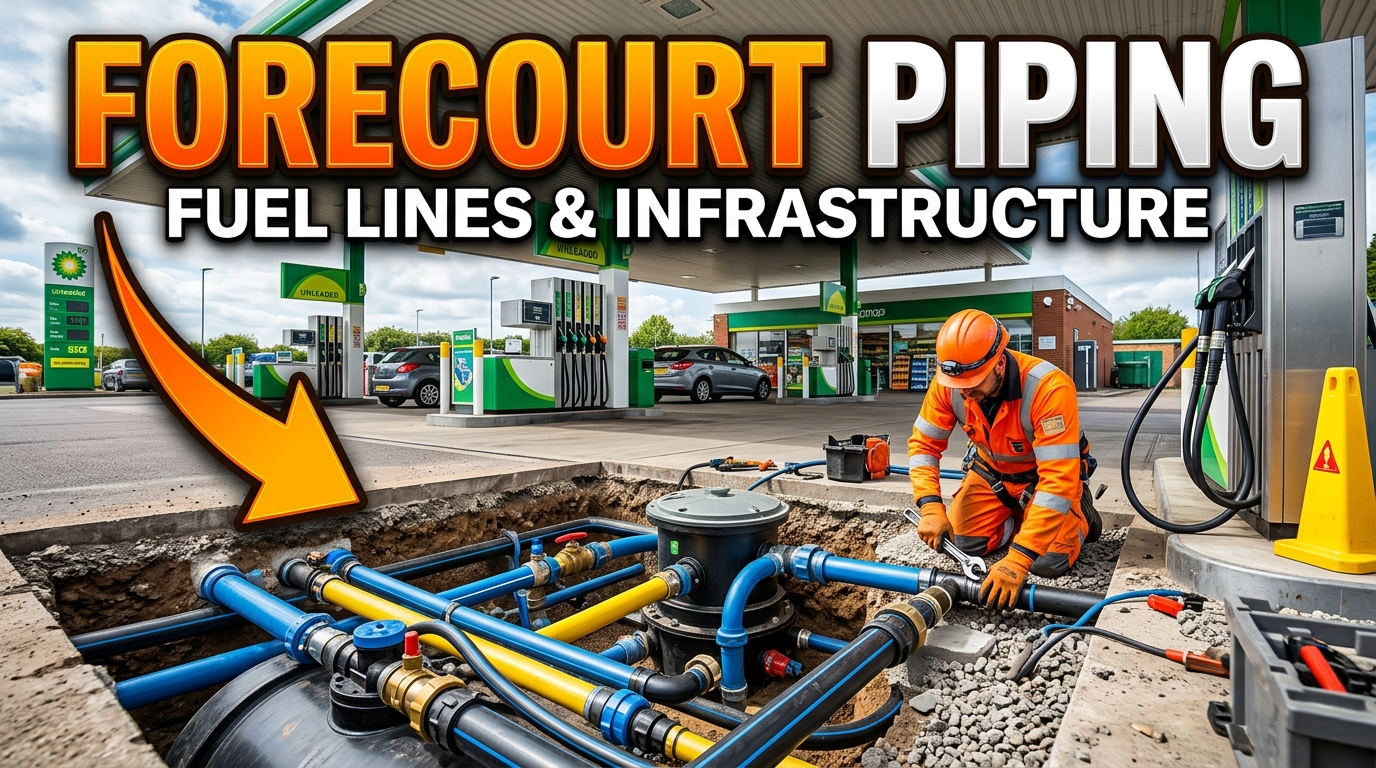
What Is Forecourt Piping?
Forecourt piping is the network of underground and above-ground pipes that connects the parts of a fuel station. Because most of it is buried, it is hard to inspect, which means quality and correct installation matter even more than usual.
A typical station uses several pipe lines:
- Product lines carry fuel from the submersible turbine pump in the underground tank to each dispenser.
- Vent lines let air move in and out of the tank as fuel is delivered and dispensed.
- Fill lines connect the tanker connection to the tank.
- Vapour recovery lines return fuel vapour to the tank where the system requires it.
- Return and balancing lines appear in some layouts, depending on the design.
As a result, the piping system affects safety, fuel quality and running costs all at once.
Types of Forecourt Piping
Several materials are available, so you can match the system to your fuel, soil conditions and regulations.
Double-Wall Flexible Piping
This pipe has an inner carrier pipe inside an outer containment pipe, so any leak from the inner pipe is caught and directed to a sump for detection. Because the pipe is supplied in long coils, it needs fewer underground joints. Consequently, installation is faster and the risk of leaking joints is lower. It is widely used for modern fuel station product lines.
Rigid Double-Wall Fibreglass (GRP/FRP) Piping
Fibreglass pipe never rusts, so it suits corrosive soil and high groundwater. It is supplied in straight lengths and joined with adhesive or mechanical fittings. In addition, double-wall versions provide secondary containment. However, correct jointing technique is essential for a leak-free result.
Steel Piping
Steel is strong and familiar, and it suits above-ground sections, risers and fittings. For underground use, it needs strong coating and corrosion protection, such as cathodic protection. Therefore, many sites choose steel for specific sections and non-metallic pipe for buried runs.
HDPE (Polyethylene) Piping
High-density polyethylene resists corrosion and many chemicals, and fused joints form a continuous, leak-resistant line. It suits certain vent, fill and product applications, provided the grade is approved for fuel contact. (Confirm suitability per product.)
Vapour Recovery Piping
Where regulations require vapour control, dedicated pipes return vapour from the dispenser or tank to the system. They must be sized and sloped correctly, so that liquid does not collect.
Single-Wall vs Double-Wall Piping
Single-wall pipe is cheaper but offers no secondary containment, so a leak goes straight into the ground. In contrast, double-wall pipe contains and signals leaks. As a result, many fuel brands and regulators now require double-wall piping for new stations.
Fittings and Accessories
A piping system is only as reliable as its joints and connections. We can supply matching components, subject to availability.
- Couplings, elbows, tees and reducers: change direction and size
- Electrofusion and mechanical fittings: make strong, tight joints
- Flanges and adapters: connect pipe to pumps, tanks and dispensers
- Entry boots and penetration fittings: seal pipes where they pass through sump walls
- Dispenser sumps: catch drips and leaks beneath each dispenser
- Transition sumps: join pipe sections and provide inspection points
- Tank sumps and manhole chambers: contain pump connections and fittings
- Shear valves (emergency valves): close automatically if a dispenser is knocked over or impacted
- Vent pipes, caps and risers: safe tank breathing
- Leak sensors and monitoring accessories: detect fuel or liquid in sumps and interstitial spaces
- Earthing and bonding components: reduce static and fire risk
See also our Valves range and Overfill Prevention Valve.
Typical Specifications
| Specification | Typical Details |
|---|---|
| Pipe types | Double-wall flexible, double-wall GRP, steel, HDPE (confirm per product) |
| Nominal sizes | About 40 mm to 100 mm (1.5″ to 4″) for product lines (confirm) |
| Construction | Single-wall or double-wall with monitored interstitial space |
| Fuels | Petrol, diesel, kerosene, ethanol blends (confirm compatibility per product) |
| Operating pressure | Rated for fuel station service, typically a few bar (confirm per product) |
| Joints | Mechanical, electrofusion, adhesive or welded (depends on material) |
| Supply form | Coils (flexible) or straight lengths (rigid) |
| Leak detection | Interstitial monitoring and sump sensors |
| Standards | EN 14125, UL 971, EN 13160, API 1615, ISO 9080 (confirm per product) |
| Design life | Often 30 years or more with correct installation (confirm) |
Key Features & Benefits
Good piping protects both your profit and the environment. First, corrosion-resistant materials, such as fibreglass and polyethylene, avoid the rust problems that cause leaks in buried steel. Second, double-wall construction adds a safety net, because it contains any leak and lets you detect it early.
In addition, flexible piping needs fewer joints, so there are fewer places where leaks can start. Moreover, sumps and shear valves protect against spills at dispensers, which reduces cleanup costs and fire risk. Smooth internal walls also keep flow steady, which helps dispensers deliver accurate volumes.
Finally, a complete system from one supplier means the pipes, fittings and sumps fit together properly, so installation is simpler and troubleshooting is easier.
Applications
Forecourt piping serves many sites. For example:
- Retail fuel stations: tank-to-dispenser product lines, vents and fill lines
- Highway service stations: high-volume dispensing networks
- Fleet depots and bus terminals: private fuelling systems
- Industrial plants and generator sites: diesel supply lines
- Airports and ports: support equipment fuelling
- Fuel depots and terminals: transfer lines and loading arms (see Non-Retail Fuel Solutions)
Flexible vs Rigid Piping Compared
| Double-Wall Flexible | Double-Wall Rigid (GRP) | Steel | |
|---|---|---|---|
| Joints underground | Few | More | More |
| Installation speed | Fast | Moderate | Slower |
| Corrosion | Does not rust | Does not rust | Needs protection |
| Best for | Long runs, standard stations | Corrosive soil, fixed layouts | Above-ground sections, risers |
| Skill needed for joints | Lower | Higher | Higher (welding) |
| Secondary containment | Yes (double-wall) | Yes (double-wall) | Needs added containment |
How to Choose the Right Forecourt Piping
First, check your regulations and fuel brand rules. Many require double-wall, non-corroding piping for new builds, so confirm this before you buy. In addition, check which standards and approvals the pipe must carry.
Next, consider the fuels. Petrol, diesel and ethanol blends affect material compatibility, because some plastics and seals degrade with certain blends. Therefore, always confirm that the pipe suits every product it will carry.
Then look at your site layout. Long runs and many dispensers favour flexible pipe, since it needs fewer joints. However, fixed layouts, corrosive soil or high groundwater may favour rigid fibreglass. Meanwhile, above-ground sections often use steel.
After that, size the pipes correctly. Pipe diameter and length affect flow rate and pressure, so match them to your pump capacity and the number of dispensers. Finally, plan sumps, leak detection and accessories together, and choose installers with proven experience in fuel piping.
Not sure which system suits your station? Send us your layout, fuels and site conditions, and we will recommend suitable options.
Why Buy Forecourt Piping from Stuffind
Stuffind is an engineering and procurement partner that supplies reliable equipment to customers across industries. Because we source from trusted manufacturers, you get consistent quality and dependable supply for fuel station projects.
We deliver across Pakistan (adjust to where you deliver), and our team helps with pipe selection and compatibility. In addition, we offer competitive quotes for single orders, multi-station projects and complete fuel station equipment packages.
You can also source underground tanks, valves, cables and switchgear from the same supplier, so your project stays simple to order.
Frequently Asked Questions
What is forecourt piping?
It is the network of pipes that carries fuel from underground tanks to dispensers, along with vent, fill and vapour lines. Because most of it is buried, it must be durable and leak-resistant.
What is the difference between single-wall and double-wall piping?
Single-wall pipe has one layer, so a leak goes straight into the ground. Double-wall pipe has an outer containment layer that catches a leak and lets sensors detect it. Therefore, double-wall pipe gives much better protection.
Is flexible or rigid piping better for a fuel station?
Both work well. Flexible pipe needs fewer joints and installs quickly, so it suits long runs. Rigid fibreglass suits corrosive soil and fixed layouts. The best choice depends on your site, regulations and installer experience.
Can steel pipe be used underground at a fuel station?
Yes, but it needs strong coating and corrosion protection, and it carries a higher long-term leak risk than non-corroding materials. As a result, many sites prefer fibreglass or flexible non-metallic pipe underground.
What size pipe do I need?
It depends on pump capacity, pipe length, the number of dispensers and the required flow rate. Share your layout and equipment, and we will help you choose suitable sizes.
What is a dispenser sump?
It is a containment chamber beneath each dispenser. It catches drips and leaks from fittings and connections, so fuel does not enter the soil, and it provides a place for leak sensors.
What is a shear valve?
A shear valve closes automatically if a dispenser is knocked over or damaged. Consequently, it stops fuel from flowing out of a broken line and reduces the risk of fire and spills.
Can piping handle ethanol-blended petrol?
Only if the pipe and seals are approved for it. Some materials degrade with certain blends, so always confirm compatibility for every fuel you will carry.
How long does forecourt piping last?
With correct materials and installation, many systems last 30 years or more. However, lifespan depends on the product, soil, groundwater and maintenance, so confirm the design life for each system.
How are fuel pipes tested for leaks?
Installers pressure test and tightness test the lines before burying them and again before commissioning. In addition, interstitial monitoring and sump sensors give ongoing protection.
Do you supply in bulk or for multiple stations?
Yes. We support single sites, multi-station rollouts and bulk project orders.
Related Products
Underground Storage Tank · Submersible Turbine Pumps · ATG System · Overfill Prevention Valve · Ball Valves · Non-Retail Fuel Solutions · All Retail Fuel Solutions
Get a Quote on Forecourt Piping
Tell us the pipe type, sizes, approximate lengths, fuels carried and the number of dispensers. Our team will respond quickly with the right recommendation and a competitive quote.
[Request a Quote]
Email: stuffind@stuffind.com | Availability: Mon–Sat, 09:00–22:00