- Empty cart.
- Continue Shopping


We ship to all 50 states, Washington DC. All orders are shipped with a UPS tracking number. Always free shipping for orders over US $200. During sale periods and promotions the delivery time may be longer than normal.

Worldwide Shopping
Guaranteed Satisfaction
Guaranteed Money Back
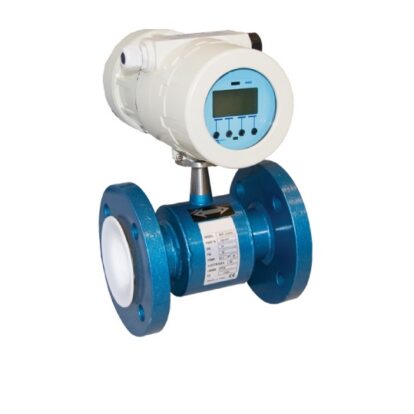
Electromagnetic water meters DN25-400 are highly reliable flow measurement devices widely used in industrial, municipal, and commercial applications. Unlike traditional mechanical meters, electromagnetic meters operate on Faraday’s Law of Electromagnetic Induction, ensuring accurate readings without moving parts. With sizes ranging from DN25 (1 inch) to DN400 (16 inches), they can handle small, medium, and large pipelines efficiently.
Whether it’s potable water, wastewater, industrial fluids, or irrigation systems, electromagnetic water meters deliver precision, durability, and low maintenance, making them a preferred choice in modern flow measurement solutions.
An electromagnetic water meter DN25-400 is a flow measurement device designed to measure the velocity and volume of conductive liquids passing through a pipe. The size range DN25 to DN400 indicates its adaptability to different pipeline diameters.
Key features include:
No moving parts, reducing wear and tear.
High accuracy, even at low flow rates.
Bidirectional measurement, useful in complex systems.
Long service life with minimal maintenance.
Electromagnetic water meters function based on Faraday’s Law, which states that when a conductive fluid passes through a magnetic field, it induces a voltage proportional to the flow velocity. This voltage is then converted into flow rate and volume.
No obstruction in the pipeline.
Better suited for dirty water and wastewater.
High repeatability and accuracy.
Low pressure loss during operation.
These meters are versatile and widely used across industries:
Accurate billing and monitoring.
Leakage detection and flow regulation.
Handles slurry, sludge, and dirty water efficiently.
Corrosion-resistant liners protect against harsh chemicals.
Food & beverage processing.
Chemical and pharmaceutical industries.
Cooling water and process monitoring.
Efficient water management.
Monitors flow in large irrigation pipelines (DN200-400).
Size Range: DN25 to DN400
Accuracy: ±0.5% of reading
Flow Range: Wide turndown ratio
Power Supply: AC/DC options
Output: 4-20mA, pulse, RS485, Modbus, etc.
Protection: IP65/IP68 for harsh environments
Lining Options: PTFE, rubber, hard rubber for different fluids
High precision measurement across different pipe sizes.
No pressure loss, maintaining system efficiency.
Minimal maintenance costs, since there are no moving parts.
Long operational life in challenging environments.
Scalable sizes (DN25-DN400) suitable for small and large systems.
DN25-DN50 → Small pipelines (commercial & residential applications).
DN65-DN150 → Medium pipelines (industrial & municipal use).
DN200-DN400 → Large pipelines (irrigation, wastewater, bulk water supply).
Ensure proper grounding to avoid electromagnetic interference.
Install in a full pipe condition to maintain accuracy.
Regularly calibrate for precise long-term performance.
Use appropriate lining material based on fluid type.
Q1. What does DN25-400 mean in electromagnetic water meters?
DN25-400 indicates the diameter size range of the pipeline (25 mm to 400 mm) that the electromagnetic meter can fit into.
Q2. Are electromagnetic water meters suitable for wastewater?
Yes. They are ideal for wastewater and dirty water applications since they have no moving parts and resist clogging.
Q3. How accurate are electromagnetic water meters?
Typically, they offer ±0.5% to ±0.2% accuracy, making them more reliable than mechanical meters.
Q4. What industries use DN25-400 electromagnetic water meters?
They are used in municipal water supply, wastewater treatment, food & beverage, chemical, pharmaceutical, and agricultural irrigation.
Q5. Do electromagnetic water meters require frequent maintenance?
No. With no moving parts, they require minimal maintenance compared to mechanical meters.
We ship to all 50 states, Washington DC. All orders are shipped with a UPS tracking number. Always free shipping for orders over US $200. During sale periods and promotions the delivery time may be longer than normal.
Urna will accept exchanges and returns of unworn and unwashed garments within 30 days of the date of purchase (14 days during the sales period), on presentation of the original till receipt at any store where the corresponding collection is available within the country of purchase.
Your return will usually be processed within a week to a week and a half. We’ll send you a Return Notification email to notify you once the return has been completed.
Please allow 1-3 business days for refunds to be received to the original form of payment once the return has been processed.